Hardwood vs. Luxury Vinyl Plank Flooring: Which Is Right for Albany Homes?
Choosing new flooring is one of the most consequential decisions in a home renovation. The floor affects how a room looks, how it feels underfoot, how well it holds up to daily life, and how it performs in Albany’s demanding climate. Two options consistently rise to the top of the conversation: traditional hardwood and luxury vinyl plank, commonly known as LVP. Both are excellent products. The right choice depends on where the floor is going, how the space is used, and what matters most to you as a homeowner.
What Is Luxury Vinyl Plank?
Luxury vinyl plank is a multi-layer synthetic flooring product engineered to realistically replicate the look and texture of real wood. The construction typically includes a rigid or flexible core for stability, a photographic layer that captures wood grain detail with remarkable accuracy, and a clear wear layer on top that protects against scratches, stains, and moisture. Modern LVP has come a long way from the vinyl flooring of previous generations — it’s a genuinely high-quality product that has earned its place in the market.
How Hardwood Flooring Is Made and Why It Matters
Solid hardwood flooring is exactly what it sounds like — a plank milled from a single piece of wood, top to bottom. Species like oak, maple, hickory, and walnut each have distinct grain patterns, hardness ratings, and natural color ranges. Engineered hardwood is a related product with a real wood veneer on top bonded to a plywood or composite core, which gives it better dimensional stability in varying humidity conditions. Both solid and engineered hardwood can be sanded and refinished, which is one of their most important long-term advantages over LVP.
How Albany's Climate Affects Your Choice
Albany experiences significant seasonal humidity and temperature swings — from hot, humid summers to cold, dry winters. These conditions affect wood flooring more than any other variable. Solid hardwood expands when humidity rises and contracts when it drops. Over time, this movement can cause gapping between boards in winter and slight cupping in summer if the floor isn’t properly acclimated and installed. Engineered hardwood handles this better due to its layered construction. LVP is entirely unaffected by moisture and humidity changes, which makes it the more forgiving choice in Albany’s variable climate — particularly in below-grade spaces like basements.
Durability: What Each Floor Can Handle
Hardwood durability depends heavily on the species chosen. Harder species like hickory and white oak resist denting and scratching better than softer options like pine. The key advantage of hardwood is that it can be sanded down and refinished — a process that removes surface damage and restores the floor to like-new condition. Most hardwood floors can be refinished three to five times over their lifespan, which means a well-maintained hardwood floor can last 50 to 80 years or more.
LVP’s wear layer resists scratches, dents, and stains extremely well in day-to-day use — often better than hardwood for households with pets or young children. However, LVP cannot be refinished. When the wear layer is eventually worn through, the floor must be replaced entirely. That said, quality LVP installed today can realistically last 20 to 30 years with normal care.
Room-by-Room Guide for Albany Homes
- Living rooms and bedrooms: Both hardwood and LVP perform well. Hardwood adds warmth and a sense of permanence; LVP offers easier maintenance and better resistance to furniture scuffs.
- Kitchens: LVP is the more practical choice due to its waterproof properties. Hardwood can be used in kitchens but requires prompt cleanup of spills and careful sealing around appliances.
- Basements: LVP is the clear and only appropriate choice. Hardwood — even engineered — should not be installed below grade in Albany's climate due to moisture risk from the slab and foundation walls.
- Bathrooms: LVP only. Hardwood should never be installed in full bathrooms regardless of sealing.
- Entryways and mudrooms: LVP's moisture and scratch resistance makes it the better fit for high-traffic, wet-prone entry areas.
Appearance and Authenticity
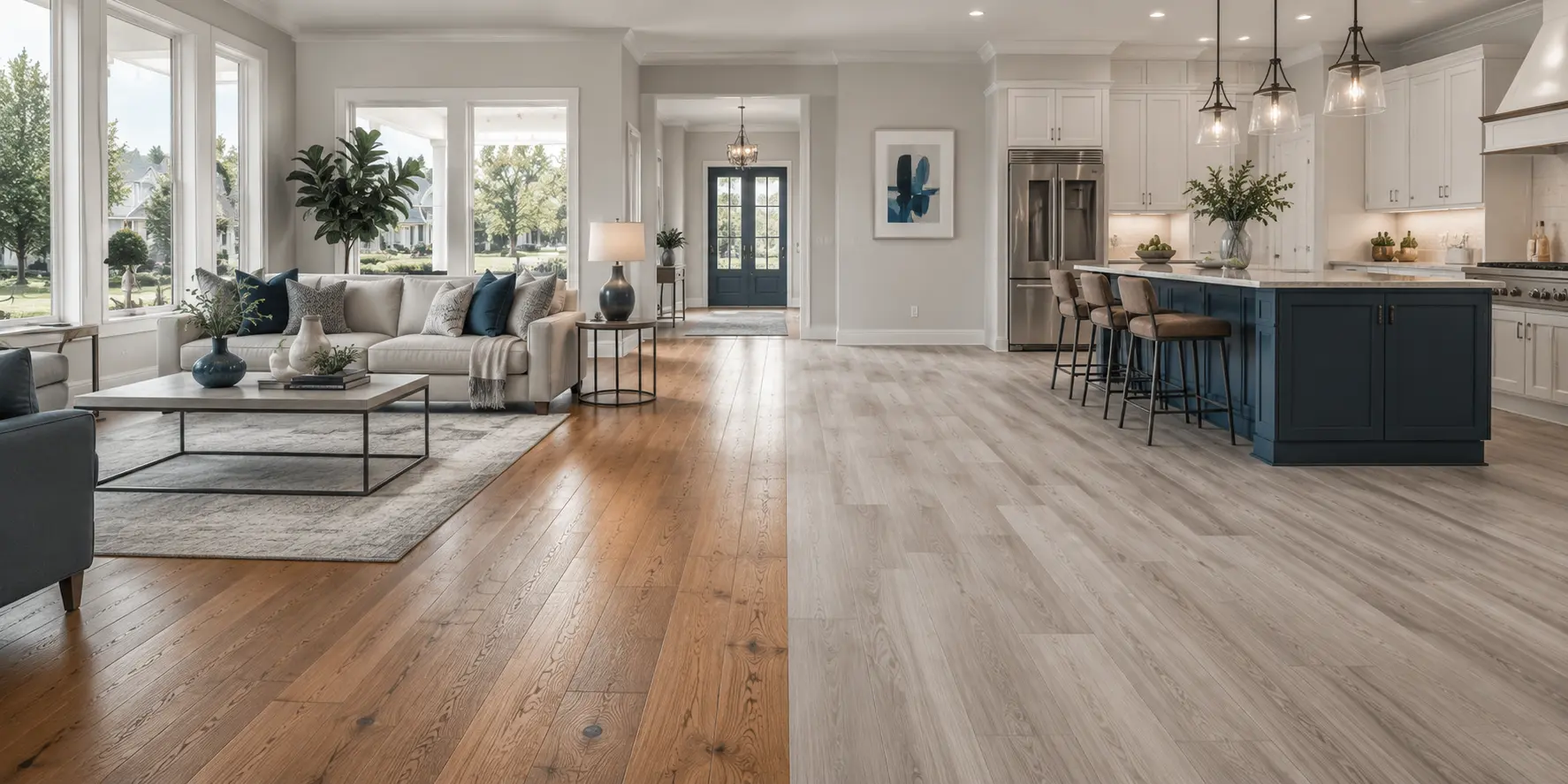
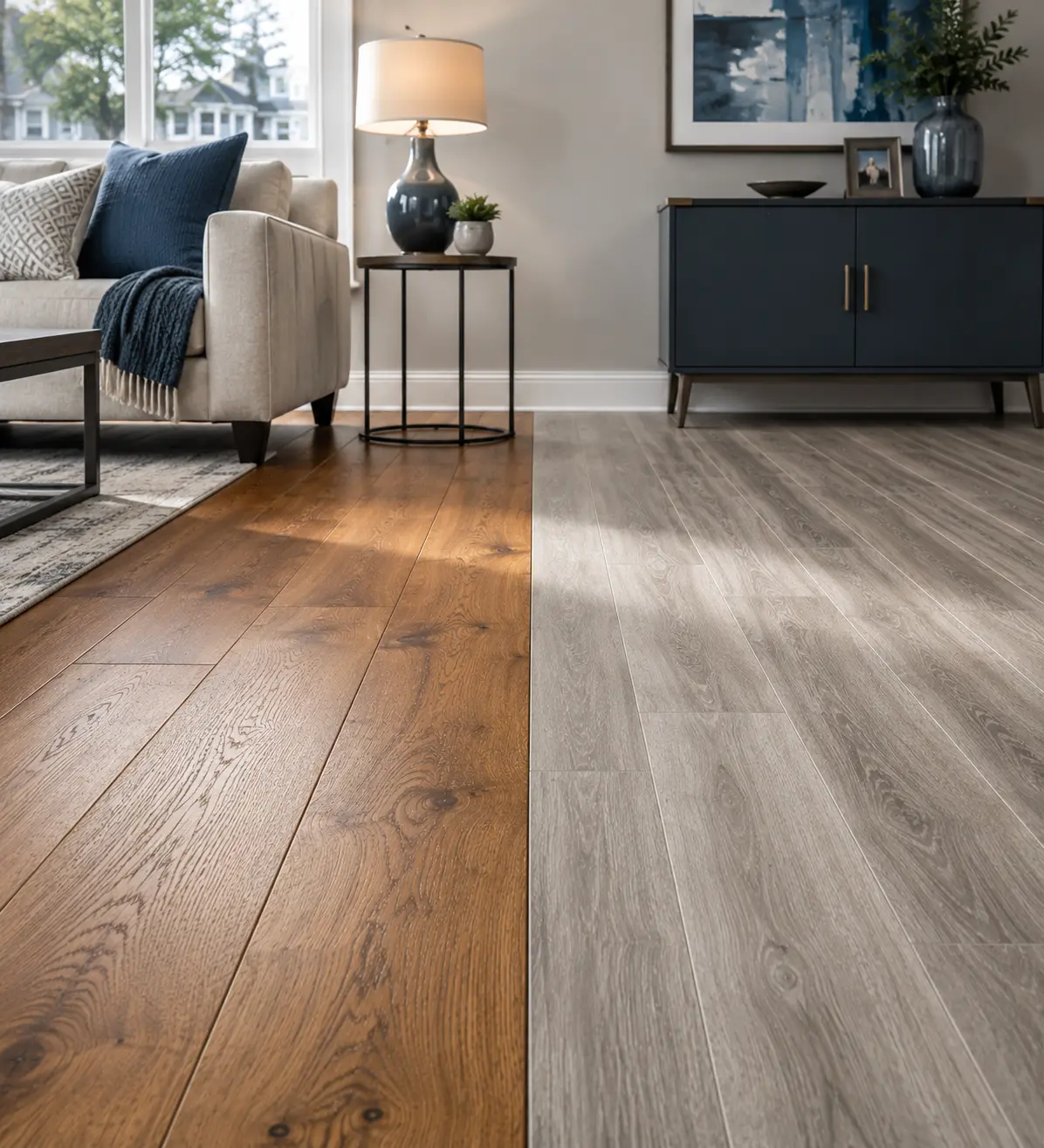
This is where personal preference matters most. Hardwood has a depth, warmth, and authenticity that LVP, however realistic, cannot fully replicate. The way light interacts with real wood grain, the slight variation between boards, the sound underfoot — these qualities are unique to natural wood. LVP has closed the gap dramatically in recent years, and in photographs the two can be nearly indistinguishable. But in person, experienced eyes can tell the difference. For homeowners who deeply value the feel of a natural material, hardwood remains the preferred choice.
Resale Value Considerations
In the Albany real estate market, hardwood floors are a consistent selling point that buyers recognize and respond to. Homes listed with hardwood floors tend to attract more interest and can support stronger asking prices than comparable homes with synthetic flooring. That said, high-quality LVP is increasingly accepted by buyers and appraisers — particularly in spaces like finished basements where hardwood wouldn’t be expected.
Alako Construction Flooring Services
We install both hardwood and luxury vinyl plank throughout Albany and the Capital Region. Our team will help you navigate the options, understand what works best in each space, and install your new floors with the precision and care that makes the difference between a floor that looks great on day one and one that looks great for decades.